“Unveiling the Mystique: 5 Rare Crystals You’ve Probably Never Heard Of”
The Earth, a celestial body teeming with natural wonders, houses an array of minerals and crystals, each with its own unique beauty and rarity. Among these treasures are crystals so rare that their names seldom grace the ears of even the most enthusiastic mineral collectors. This exploration delves into the mystique of five such crystals, shedding light on their origins, characteristics, and the reasons behind their scarcity.
###
- Painite
First discovered in Myanmar by British gemologist Arthur C.D. Pain in the 1950s, Painite was once considered the rarest mineral on Earth. Characterized by its hexagonal crystal system, Painite boasts a striking bordeaux color. Its composition, a complex calcium zirconium borate mineral, contributes to its rarity. For decades, only a few specimens were known to exist, but recent discoveries in Myanmar have slightly increased its availability. Despite this, Painite remains a coveted rarity among gem collectors.
###
- Red Beryl
Red Beryl, often referred to as the “Red Emerald,” is a mineral that is both bewitching and exceptionally rare. Primarily found in the Wah Wah Mountains of Utah, USA, its scarcity is attributed to its unique formation conditions. Unlike traditional beryl, which is relatively common, Red Beryl requires a specific geochemical environment to form, involving beryllium and manganese-rich vapors that cool and crystallize. Its vivid red hue, unmatched by any other gemstone, makes it a prized possession for collectors and jewelers alike.
###
- Jeremejevite
Discovered in the late 19th century by Russian mineralogist Pavel Jeremejev, Jeremejevite is an aluminum borate mineral with varying colors from colorless to a light blue or yellow hue. Originally found in the Adun-Chilon Mountains in Siberia, this crystal is also unearthed in Namibia. Its rarity is attributed to its specific formation conditions, which involve high boron concentrations in evaporated bodies of water. Jeremejevite’s hardness makes it a gemstone with potential for jewelry, yet its scarcity often relegates it to the cabinets of collectors.
###
- Taaffeite
Unlike many gems that are identified while in mineral form, Taaffeite was first recognized already cut and polished, mistaken for a spinel. Named after the Austrian gemologist Richard Taaffe who identified it in 1945, this mineral is extraordinary for its rarity and beauty. Mostly found in Sri Lanka and Tanzania, Taaffeite’s color ranges from mauve to lavender and even red. Its distinction lies not just in its scarcity but in its dual reflective properties, making it a gemologist’s enigma and a collector’s dream.
###
- Grandidierite
Originating from Madagascar and named after the French naturalist Alfred Grandidier, Grandidierite is an enigmatic mineral known for its striking blue-green color. Its transparency and color saturation are the primary criteria that determine its value. The crystal’s rarity is due to its very specific and scarce geological formation conditions. It is most commonly found in the southern regions of Madagascar, though it has also been discovered in parts of Sri Lanka and Malawi. Grandidierite’s allure lies in its mesmerizing hue and the rarity that makes it a centerpiece of any mineral collection.
The world of minerals and crystals is vast and varied, with these five rare crystals representing just a glimpse into
“Beyond Diamonds: Exploring the World’s Rarest and Most Unique Crystals”
The allure of diamonds, with their unmatched brilliance and durability, has captivated humanity for centuries. However, the realm of gemstones and crystals extends far beyond these well-known treasures. This article embarks on an exploration of the world’s rarest and most unique crystals, offering a glimpse into the extraordinary diversity of minerals that our planet harbors.
### Painite
Once considered the rarest mineral in the world, Painite was discovered in Myanmar in the 1950s. For decades, there were only a handful of known specimens, making it an elusive treasure for collectors. Painite is distinguished by its striking bordeaux color and hexagonal crystal structure. Despite recent discoveries that have increased its availability, Painite remains a remarkable example of mineral rarity and beauty.
### Red Beryl
Red Beryl, also known as Bixbite, is a mineral that rivals diamonds in scarcity. Found primarily in the Wah Wah Mountains of Utah, its vibrant raspberry-pink hue sets it apart from other beryls, such as emeralds and aquamarines. The unique conditions required for its formation make Red Beryl 1,000 times more rare than diamonds. Its rarity, combined with its striking color, makes it a highly coveted gemstone among collectors.
### Benitoite
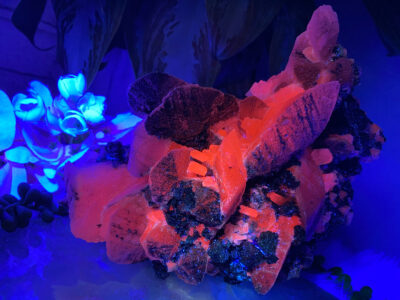
Discovered in California in the early 20th century, Benitoite is the official state gem of California. This rare mineral is known for its deep blue color and unusual triangular crystal formation. Benitoite fluoresces under UV light, displaying a captivating blue glow. The majority of Benitoite specimens are found in one small area in San Benito County, making it a rare and prized gemstone.
### Taaffeite
Taaffeite is a gemstone that was initially mistaken for a spinel due to its similarity in appearance. However, its double refractive property sets it apart. Found in Sri Lanka, Tanzania, and China, Taaffeite’s rarity is attributed to its limited geographic distribution. Its colors range from mauve to lavender and even green. The discovery of Taaffeite was a significant addition to the world of gemology, adding to the diversity of known minerals.
### Grandidierite
Grandidierite is an enigmatic mineral known for its blue-green to turquoise color. It was first discovered in Madagascar and named after French explorer Alfred Grandidier. This translucent to transparent mineral is often included, which can enhance its beauty. Grandidierite’s rarity and striking coloration make it a sought-after gem for collectors and jewelry enthusiasts alike.
### Musgravite
An extremely rare member of the taaffeite family, Musgravite was first discovered in the Musgrave Ranges of Australia. Similar in appearance to taaffeite, Musgravite presents a challenge to even the most experienced gemologists to distinguish it from its relatives. Its rarity and the difficulty in mining it contribute to its status as one of the most coveted and expensive gemstones in the world.
### Serendibite
Serendibite is a complex borosilicate mineral that was first discovered in Sri Lanka. Its name is derived from Serendib, an old Arabic name for Sri Lanka. Known for its deep blue to greenish-blue hues, Serendibite is exceptionally rare and valuable. The combination of its unique color, brilliance, and scarcity makes it a gemstone of great interest to collectors and gem enthusiasts.
### Conclusion
The world of crystals and gemstones
“Hidden Gems: Discovering the Secret Powers of Rare Crystals”
In the realm of mineralogy and gemology, the allure of precious stones extends beyond the sparkle of diamonds and the deep hues of rubies and sapphires. Within this vast domain lies a collection of rare crystals, each harboring unique attributes and energies that have captivated the interest of collectors, enthusiasts, and practitioners of holistic healing. This exploration seeks to unveil the secret powers of these hidden gems, offering a deeper understanding of their significance and potential applications.
###
- Larimar: The Tranquility Stone
Found only in the Dominican Republic, Larimar is a striking blue stone that embodies the calming energies of the sea and sky. Its soothing aura is said to promote relaxation, ease stress, and foster open communication. Known as the “Atlantis Stone,” Larimar is believed to connect its wearer with the ancient wisdom of lost civilizations, enhancing intuition and spiritual growth.
###
- Moldavite: The Transformation Crystal
Moldavite is a rare, green tektite formed from a meteorite impact nearly 15 million years ago in what is now the Czech Republic. This powerful crystal is renowned for its intense vibrational energy, which is thought to accelerate spiritual evolution, catalyze profound life changes, and elevate consciousness. Moldavite’s extraterrestrial origins imbue it with a unique frequency that resonates with the heart chakra, facilitating deep emotional healing and transformation.
###
- Phenakite: The Visionary Stone
Phenakite is a rare, high-vibration crystal often used to enhance inner vision and intuition. With its ability to activate the higher chakras, particularly the third eye and crown, Phenakite is considered a powerful tool for meditation and spiritual communication. Its clear, pure energy is said to facilitate access to the Akashic Records, unlocking insights into past lives and spiritual knowledge.
###
- Painite: The Stone of Alchemical Magic
Once listed as the world’s rarest mineral, Painite is an extraordinary crystal with a deep reddish-brown color. It was discovered in Myanmar in the early 1950s and for decades remained one of the most elusive gems, with only a handful of specimens known to exist. Painite is believed to hold potent alchemical energies, aiding in the transformation of the self and the manifestation of one’s deepest desires. Its rarity and unique vibrational properties make it a highly sought-after stone for collectors and those seeking to harness its mystical powers.
###
- Shungite: The Protective Powerhouse
Hailing from the Karelia region of Russia, Shungite is an ancient stone, over two billion years old, with remarkable purifying and protective qualities. Composed almost entirely of carbon, it is renowned for its ability to neutralize electromagnetic radiation, making it highly valuable in our technology-driven world. Beyond its shielding capabilities, Shungite is believed to detoxify the body, promote healing, and restore emotional balance.
### Conclusion
The world of rare crystals and gemstones is a testament to the earth’s extraordinary diversity and the profound impact these natural wonders can have on our lives. Whether sought for their beauty, healing properties, or spiritual significance, these hidden gems offer a unique glimpse into the mysteries of the natural world. As we continue to discover and study these rare crystals, we unlock the potential to harness their secret powers, enriching our lives and deepening our connection to the earth.
“From Painite to Grandidierite: Journey into the Realm of Exquisite and Rare Crystals”
From Painite to Grandidierite: Journey into the Realm of Exquisite and Rare Crystals
The world of gemstones is not only dazzling but also profoundly intricate, harboring minerals that are as enigmatic as they are rare. Among these, Painite and Grandidierite stand out as two of the most exquisite and elusive crystals known to mankind. This foray into the realm of these extraordinary minerals reveals not only their unique characteristics but also the reasons behind their rarity and value.
**Painite: The Once Elusive Gemstone**
Discovered in Myanmar in the 1950s by the gemologist Arthur C.D. Pain, Painite was once considered the rarest mineral on Earth. For decades, only a few specimens were known to exist, making it a gem more spoken of than seen. Painite is a borate mineral, composed of boron, calcium, aluminum, and oxygen, with trace amounts of vanadium and chromium, which contribute to its typically reddish or brownish hue. Its hexagonal crystal system is distinct, but what sets Painite apart is not merely its crystal structure or composition, but its sheer rarity.
The scarcity of Painite can be attributed to its very specific geological formation conditions, which occur only under extremely high pressure and temperature. Moreover, its deposits have been found in a limited number of locations, primarily in Myanmar, contributing to its rarity. Over the years, advancements in mining and gemology have led to the discovery of additional Painite specimens, slightly reducing its rarity but not its allure among collectors and gem enthusiasts.
**Grandidierite: A Vision in Blue-Green**
Grandidierite, with its mesmerizing shades of blue and green, is a silicate mineral that owes its splendid coloration to traces of iron. It was first discovered in southern Madagascar in 1902 and named in honor of the French explorer Alfred Grandidier, who was renowned for his studies of Madagascar. Grandidierite is a triclinic mineral, which means its crystal system has three axes of unequal length that are not orthogonal. This structural complexity is mirrored in its rare beauty, making it a sought-after gem for high-end jewelry.
The rarity of Grandidierite lies in its very limited geographical distribution and the specific conditions required for its formation. Besides Madagascar, only a handful of locations worldwide have yielded small deposits of this mineral, including Sri Lanka, Malawi, and the United States. Its scarcity, combined with its striking color and translucency, positions Grandidierite among the most coveted gems on the planet.
**Conclusion: A Realm of Rarity and Beauty**
The journey from Painite to Grandidierite offers a glimpse into the fascinating world of rare gemstones, where beauty is matched by scarcity. These minerals captivate not only with their aesthetic appeal but also with the stories of their discovery and the challenges involved in their extraction. As symbols of the Earth’s hidden treasures, Painite and Grandidierite embody the allure of the mineral kingdom, reminding us of the relentless pursuit of knowledge and the appreciation of beauty that drives humanity. Their existence enriches our understanding of the planet’s geological diversity and adds a layer of wonder to the natural world.
“Rare Beauties of the Earth: A Deep Dive into the World’s Most Unique Crystals”
Rare Beauties of the Earth: A Deep Dive into the World’s Most Unique Crystals
The Earth, in its vast and varied composition, harbors minerals and crystals of astounding beauty and complexity. Among these natural treasures, a select few stand out for their unique characteristics, rarity, and the sheer awe they inspire in both the scientific community and crystal enthusiasts alike. This discourse aims to elucidate the distinctive features, origins, and significance of some of the world’s most unique crystals.
### Benitoite
Benitoite, the state gem of California, emerges as a premier example of rarity and beauty. This crystal captivates with its sapphire-blue hue and distinctive, triangular crystal formation. Found primarily in San Benito County, California, benitoite is a barium titanium silicate mineral that fluoresces under short wave ultraviolet light, revealing a mesmerizing chalky blue glow. Its formation process, geological occurrence, and the specific conditions required for its creation contribute to its rarity and value. The allure of benitoite is not merely in its aesthetic appeal but also in its scientific significance, offering insights into the geological processes that shape our planet.
### Painite
Once considered the rarest mineral in the world, painite holds a peculiar charm for its rarity and the story of its discovery. This borate mineral was first identified in Myanmar in the 1950s. For decades, only a handful of specimens were known to exist, making it an elusive treasure for mineralogists and collectors. Painite is distinguished by its hexagonal crystal system and ranges in color from reddish-brown to a deep, almost black, hue. The recent discovery of more significant deposits has made painite more accessible, yet it remains a symbol of the Earth’s capacity to conceal wonders waiting to be discovered.
### Rhodochrosite
Rhodochrosite stands out for its striking, rosy pink color, which can range from a soft, pale hue to vibrant, almost red shades. This manganese carbonate mineral is most renowned for its beautifully formed crystals and banded patterns, often seen in stalactitic formations. The Capillitas Mine in Argentina is famed for producing some of the most spectacular specimens of rhodochrosite, showcasing intricate layers that captivate the observer. Beyond its visual appeal, rhodochrosite is appreciated for its complex formation process and the insights it provides into the Earth’s mineralogical diversity.
### Larimar
Larimar, or blue pectolite, is notable not only for its stunning sky-blue coloration but also for its exclusivity to the Dominican Republic. The unique volcanic conditions required for its formation, involving the crystallization of acid lavas, make it a geological curiosity. Larimar’s soothing colors and patterns have made it a sought-after gemstone in jewelry, transcending its geological rarity to become a cultural and artistic treasure.
### Alexandrite
Alexandrite is a chameleon of the mineral world, famous for its remarkable color-changing ability. Depending on the lighting, alexandrite can shift from a lush green in daylight to a deep red in incandescent light. This phenomenon is due to the complex way alexandrite’s crystal structure absorbs light. Its rarity is compounded by the specific geological conditions required for its formation, involving the presence of beryllium and chromium. Originating primarily from Russia’s Ural Mountains, alexandrite encapsulates the magic and mystery of the Earth’s natural