“Unlocking the Mysteries: A Deep Dive into the World’s Rarest Crystals”
The world of mineralogy is a treasure trove of mysteries and wonders, with crystals forming a mesmerizing subset that captures the imagination of scientists and enthusiasts alike. Among these natural marvels, a select few stand out due to their rarity and unique properties. This article endeavors to shed light on some of the world’s rarest crystals, exploring their origins, characteristics, and the reasons behind their scarcity.
###
- Painite
Once considered the rarest mineral in the world, Painite is a borate mineral first discovered in Myanmar by British gemologist Arthur C.D. Pain in the 1950s. For decades, this enigmatic crystal was known only from a handful of specimens, making it an object of intense fascination. Painite is distinguished by its hexagonal crystal system and an unusual orange-red to brownish-red color, attributed to trace amounts of iron and vanadium. The rarity of Painite is primarily due to its highly specific formation conditions, requiring a unique combination of high pressure, temperature, and the presence of specific elements.
###
- Red Beryl
Red Beryl, also known as Bixbite, is a mineral of extraordinary rarity and beauty. Found predominantly in the Wah Wah Mountains of Utah, USA, it is estimated to be 1,000 times more rare than diamonds. This scarcity is largely due to its formation environment; Red Beryl only forms in topaz-bearing rhyolites and volcanic vents, where beryllium-rich vapors crystallize under the right conditions. Its striking red color, which can range from raspberry to a rich scarlet, is due to the presence of manganese ions. The extreme rarity, combined with its exceptional hardness, makes Red Beryl a highly sought-after gemstone among collectors.
###
- Taaffeite
Discovered accidentally in 1945 by Austrian gemologist Richard Taaffe, Taaffeite is a rare gemstone that was initially mistaken for a spinel. However, its double refraction property quickly set it apart, marking it as a distinct species. Taaffeite is known for its range of colors, from colorless to violet, pink, and blue. The rarity of Taaffeite is attributed to its limited occurrence, primarily found in alluvial deposits in Sri Lanka and Tanzania, making it one of the few gemstones that are rarer in nature than diamonds. The precise conditions under which Taaffeite forms remain a subject of study, adding to its mystique.
###
- Benitoite
California’s state gemstone, Benitoite, is a rare barium titanium silicate mineral that is found in only a few locations worldwide, with the most significant deposits located in San Benito County, California. Its discovery in 1907 by James Couch was serendipitous, as the striking blue crystals were initially mistaken for sapphires. However, Benitoite’s unique crystal structure, exhibiting a trigonal system, sets it apart. The crystal’s mesmerizing blue hue is attributed to trace amounts of iron. Benitoite’s formation requires a rare geological setting where barium-rich waters interact with serpentine.
### Conclusion
The rarities described herein represent merely a glimpse into the vast and intricate world of crystals. Their scarcity not only makes them highly desirable to collectors but also offers unique insights into the geological processes that govern our planet’s inner workings. Each of these crystals, with its distinctive features and formation history, underscores the
“Beyond Diamonds: Exploring the Most Unique and Seldom Found Crystals on Earth”
The Earth, a planet of immense geological diversity, harbors countless minerals, many of which crystallize into forms of stunning beauty and complexity. While diamonds are often celebrated for their brilliance and hardness, our planet also boasts a plethora of other crystals that are equally fascinating, if not more so, due to their unique properties and the rarity with which they are found. This exploration delves into some of the most unique and seldom found crystals on Earth, shedding light on their origins, characteristics, and the reasons behind their scarcity.
### Painite
Once considered the rarest mineral in the world, Painite was discovered in Myanmar in the 1950s by the gemologist Arthur C.D. Pain. For decades, only a few specimens were known to exist, making it an extraordinary rarity. Painite is distinguished by its hexagonal crystal structure and its unusual brownish-red to reddish-brown color. Its scarcity is primarily due to its very specific formation conditions, requiring a unique geochemical environment that is seldom found on Earth.
### Bixbite (Red Beryl)
Bixbite, or red beryl, is another gem that is both rare and mesmerizing. Found in specific regions of the United States, such as Utah and New Mexico, its vibrant red hue is due to the presence of manganese. The rarity of red beryl is attributed to its formation environment; it crystallizes under low pressure and high temperature in the cavities of rhyolite, a volcanic rock. The conditions required for its formation are so precise that it is estimated to be a thousand times rarer than diamonds.
### Taaffeite
Discovered accidentally when it was mistaken for a spinel, Taaffeite is a gemstone that ranges in color from blue to mauve. Its discovery is credited to the gemologist Richard Taaffe, who identified the stone as a distinct mineral in
- Unlike most gemstones that are identified in their rough state, Taaffeite was first recognized in a cut and polished form. Its rarity is linked to its very limited occurrence, primarily found in Sri Lanka and Tanzania, and the fact that it is often overlooked due to its similarity to other more common gemstones.
### Benitoite
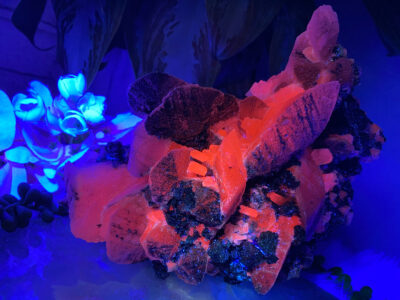
California’s state gemstone, Benitoite, is a striking blue crystal that fluoresces under short wave ultraviolet light, emitting a vibrant blue glow. It was discovered in 1907 near the headwaters of the San Benito River, from which it derives its name. The conditions for the formation of Benitoite are exceptionally rare, requiring a high barium content and low silica activity, limiting its occurrence to a few locations worldwide. The San Benito County deposit remains the only commercially viable source of gem-quality Benitoite, making it a true geological rarity.
### Jeremejevite
Discovered in Siberia in the late 19th century by the Russian mineralogist Pavel Jeremejev, Jeremejevite is an aluminum borate mineral with variable fluoride and hydroxide ions. It is prized for its aesthetic appeal, displaying colors that range from colorless to a soft blue or yellow. The rarity of Jeremejevite stems from its very specific formation conditions, which involve high boron concentrations and a particular pH level in pegmatites or granitic environments. Significant deposits have been found in Namibia, but the mineral remains exceedingly rare.
These crystals exemplify the geological diversity and complexity of our planet
“From Painite to Grandidierite: The Fascinating World of Ultra-Rare Crystals”
In the realm of mineralogy, the allure of ultra-rare crystals stands unparalleled, drawing collectors, scientists, and enthusiasts alike into an ever-expansive pursuit of these extraordinary formations. Among these, Painite and Grandidierite are two specimens that exemplify the pinnacle of rarity and beauty, each with a unique story and set of characteristics that underscore their significance in the fascinating world of ultra-rare crystals.
Painite was once considered the rarest mineral on Earth, discovered in Myanmar by the British gemologist Arthur C.D. Pain in the 1950s. For decades, only a handful of specimens were known to exist, making it an elusive treasure in the mineralogical community. Structurally, Painite is a borate mineral, characterized by its hexagonal crystal system and an intriguing composition that includes elements such as boron, calcium, zirconium, and aluminum, among others. Its color ranges from reddish-brown to black, with a translucency that can reveal deep, fiery hues when backlit. The rarity of Painite can be attributed to its highly specific formation conditions, requiring the presence of boron and the absence of silicon, which is uncommon in the Earth’s crust.
On the other hand, Grandidierite, named after the French explorer Alfred Grandidier who studied the natural history of Madagascar, is another gemstone that captivates with its rarity and beauty. This mineral was first discovered in southern Madagascar in 1902 and is known for its remarkable blue-green to turquoise color. Grandidierite is a magnesium aluminum borosilicate, distinguished by its orthorhombic crystal system and a pleochroism that displays different colors when viewed from various angles, including shades of blue, green, and white. The beauty and rarity of Grandidierite have propelled it into the ranks of the most sought-after gems, with high-quality specimens being particularly prized for their translucence and deep, saturated colors.
The scarcity of Painite and Grandidierite can be attributed to their very specific geological formation conditions. For instance, Grandidierite requires an environment rich in boron and an absence of silica, similar to the conditions needed for the formation of Painite, but with the addition of magnesium and aluminum. These conditions are exceedingly rare, limiting the locations where these minerals can form and be found.
The discovery and subsequent study of these ultra-rare crystals have significant implications for both mineralogy and gemology. They provide insights into the complex processes that govern the Earth’s crust’s mineralogical diversity, offering a window into the conditions that prevail deep within the Earth. Moreover, their rarity and beauty elevate their status to that of highly coveted specimens among collectors, driving research and exploration to uncover more about these and other rare minerals.
In conclusion, the world of ultra-rare crystals such as Painite and Grandidierite is a testament to the Earth’s mineralogical diversity and the intricate processes that produce such breathtaking natural wonders. These minerals not only fascinate with their rarity and aesthetic appeal but also contribute valuable knowledge to the scientific community, embodying the endless quest for understanding the natural world. As exploration and technology advance, the discovery of new ultra-rare crystals will undoubtedly continue, further enriching our appreciation for the planet’s hidden treasures.
“Rare Gems Unearthed: A Journey Through the Enigmatic Realm of Exotic Crystals”
Rare Gems Unearthed: A Journey Through the Enigmatic Realm of Exotic Crystals
The world beneath our feet holds a treasure trove of wonders, many of which remain largely unexplored and unknown to the vast majority of humankind. Among these natural treasures are exotic crystals and gemstones, materials that not only bewitch the eye with their incomparable beauty but also captivate the mind with their complex formations and unique properties. This treatise endeavors to illuminate the reader on the fascinating subject of these rare gems, delving into their origins, characteristics, and the reasons behind their coveted status.
### The Genesis of Gemstones
The formation of exotic crystals and gemstones is a phenomenon that unfolds over millions, if not billions, of years. The process is governed by extreme conditions of pressure and temperature, conditions that are found in specific zones within the Earth’s crust. These zones act as crucibles in which common elements are transmuted into rare and valuable crystals through geological processes. The genesis of these gems is not only a function of the environmental conditions but also of time, a factor that contributes to their rarity and value.
### The Spectrum of Rarity
The rarity of a gemstone is determined by several factors, including its geographical distribution, the difficulty involved in its extraction, and its demand in various markets. For instance, Painite, once considered the rarest mineral in the world, is found in only a few locations in Myanmar. Similarly, Red Beryl, often referred to as the “red emerald,” is mined exclusively in the Wah Wah Mountains of Utah, making it vastly rarer than its green counterpart. These examples underscore the geographical scarcity that contributes to the rarity and allure of these exquisite minerals.
### The Lure of the Exotic
Exotic gemstones captivate the imagination not only through their rarity but also through their unparalleled aesthetic qualities. Their colors, clarity, and luster are often beyond compare, with some displaying phenomenal attributes such as color change (alexandrite), play-of-color (opals), or chatoyancy (cat’s eye chrysoberyl). Moreover, their physical and chemical properties can be as intriguing as their appearances. For example, the piezoelectricity in quartz crystals has practical applications in electronics and timekeeping devices, illustrating the fusion of natural beauty and utility.
### Conservation and Ethical Considerations
As the allure of exotic crystals and gemstones continues to grow, it becomes imperative to address the ethical and conservation issues associated with their mining and distribution. The extraction of these precious resources can have profound environmental impacts, and the pursuit of rarity often leads to exploitation and conflict. Consequently, the gemstone industry is increasingly embracing ethical sourcing practices and supporting initiatives that promote sustainability and fair trade. Consumers, too, are encouraged to consider the provenance of their purchases, opting for gems that are not only beautiful but also ethically sourced.
### Conclusion
The realm of exotic crystals and gemstones is vast and full of mysteries waiting to be unraveled. These natural wonders, formed through the ages by the Earth’s own hand, offer us a glimpse into the dynamic processes that shape our planet. They remind us of the fleeting nature of beauty and the value of rarity. As we continue to explore and understand this enigmatic realm, let us also commit to preserving it for future generations to marvel at and study. In doing so, we ensure that the journey through the fascinating world of exotic crystals and gemstones is one that can
“The Hidden Treasures of the Earth: Discovering the Allure of Rare and Beautiful Crystals”
## The Hidden Treasures of the Earth: Discovering the Allure of Rare and Beautiful Crystals
The Earth, in its vast expanse and ancient history, harbors countless treasures beneath its surface. Among these are minerals and gems that, through a confluence of geological processes, transform into crystals of astonishing beauty and rarity. These crystals, formed over millennia, are not merely objects of aesthetic admiration but also hold significant scientific, cultural, and economic value. This exploration delves into the allure of these rare and beautiful crystals, shedding light on their formation, significance, and the relentless quest of humankind to uncover these hidden treasures of the Earth.
### Formation and Classification
Crystals are solid materials whose constituent atoms, molecules, or ions are arranged in an orderly repeating pattern extending in all three spatial dimensions. The process of crystal formation, known as crystallization, occurs through various mechanisms, including cooling of lava, evaporation of mineral-rich water, or high-pressure conditions deep within the Earth’s crust.
Crystals are classified into different types based on their chemical composition and the arrangement of their atoms. The primary categories include silicates, carbonates, oxides, sulfates, and halides, each comprising a plethora of crystals with unique properties and appearances. For instance, silicates, which constitute the largest group, include well-known crystals such as quartz, while carbonates encompass calcite and malachite, renowned for their striking colors and patterns.
### Rarity and Value
The rarity of a crystal is determined by several factors, including its geographical availability, the complexity of its formation process, and its demand in various markets. For example, painite, once considered the world’s rarest mineral, is found in only a few locations in Myanmar. Its scarcity, combined with its unique pinkish-brown hue, makes it highly sought after by collectors and gemologists.
The value of rare crystals transcends their monetary worth, embodying the marvels of Earth’s geological processes. Collectors and researchers cherish these crystals for their exceptional characteristics and the insights they provide into the Earth’s interior. Moreover, certain crystals are believed to possess metaphysical properties, adding to their allure and mystique.
### Conservation and Ethical Considerations
The pursuit of rare crystals, while often driven by a passion for natural beauty and scientific inquiry, raises important ethical and conservation issues. Over-extraction can lead to habitat destruction, loss of biodiversity, and adverse impacts on local communities. As such, responsible sourcing and adherence to ethical mining practices are paramount.
Organizations and governing bodies worldwide are increasingly advocating for sustainable practices in the mining and trade of rare crystals. This includes implementing stricter regulations, promoting fair trade, and encouraging the use of synthetic alternatives where possible. Such measures aim to balance the desire to explore and enjoy Earth’s treasures with the imperative to preserve its ecosystems and ensure equitable benefits for all stakeholders involved.
### Conclusion
The hidden treasures of the Earth, manifested in the form of rare and beautiful crystals, continue to captivate and intrigue humanity. Their formation, a testament to the planet’s dynamic processes, reflects the complexity and interconnectedness of the natural world. As we seek to uncover and understand these treasures, it is incumbent upon us to do so with respect for the environment and the communities that call these lands home. In appreciating the allure of rare crystals, we are reminded of the need to cherish and safeguard the extraordinary planet that nurtures such wonders.